
Aikido is a modern, non-competitive, Japanese martial art with deep roots in the traditional arts. It can be very challenging without any of the machismo that one may usually associate with competitive martial arts.
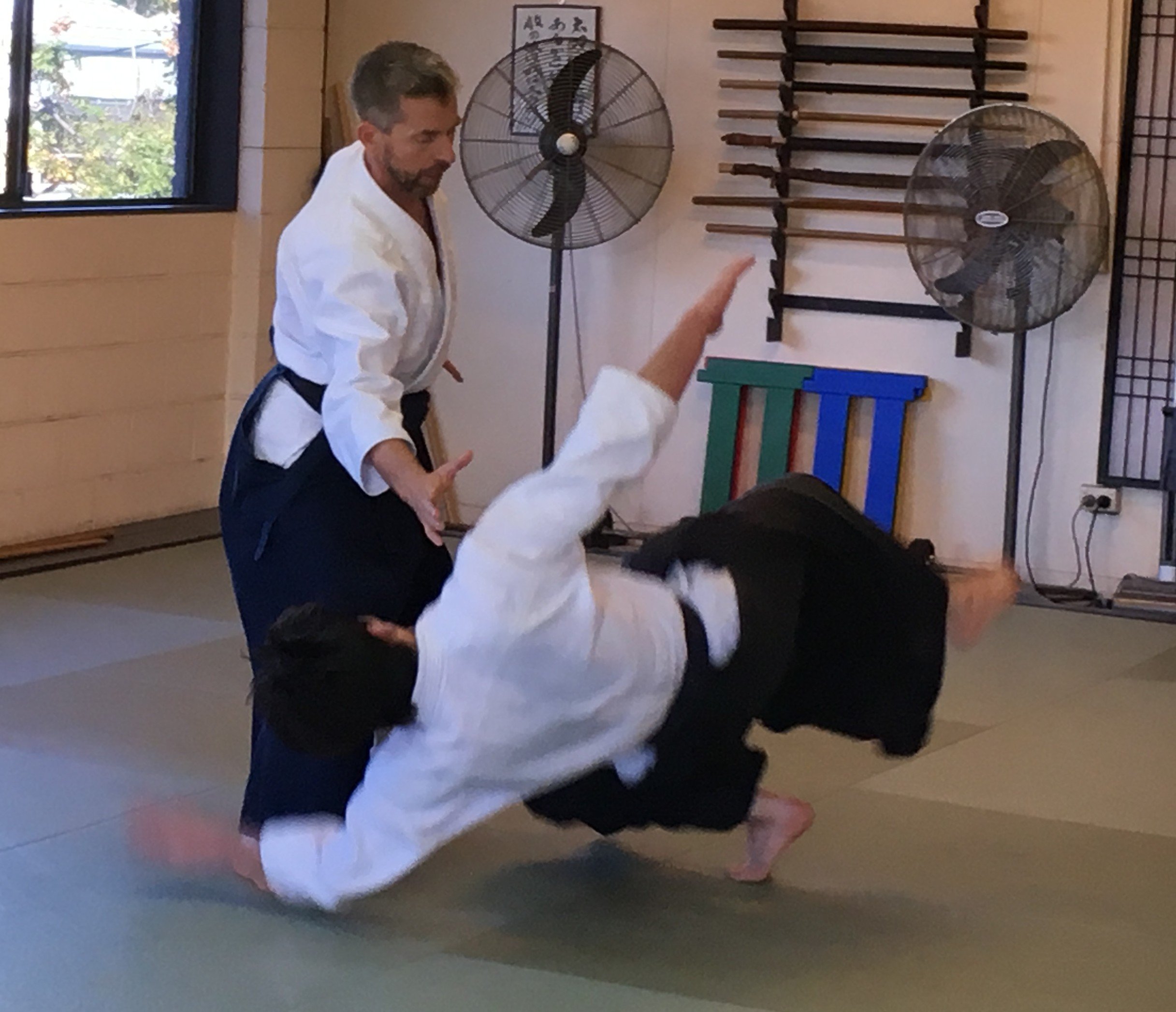
The word Aikido means the path (do) to blend or harmonise (ai) natural energy (ki). Physically, this means is that the techniques are designed to throw/imobilise someone by moving in the sweet spot that avoids relying on muscular strength. Also one can redirect the attackers force against them which allows people with less strength to overcome people with more strength. It is therefore suited for people of all sizes, shapes and gender and everyone trains together no matter their age or size.
However, Aikido is more than just an effective form of self defense or exercise. It is a constantly challenging way to develop a deep awareness of ones own body/mind and how it interacts with others.
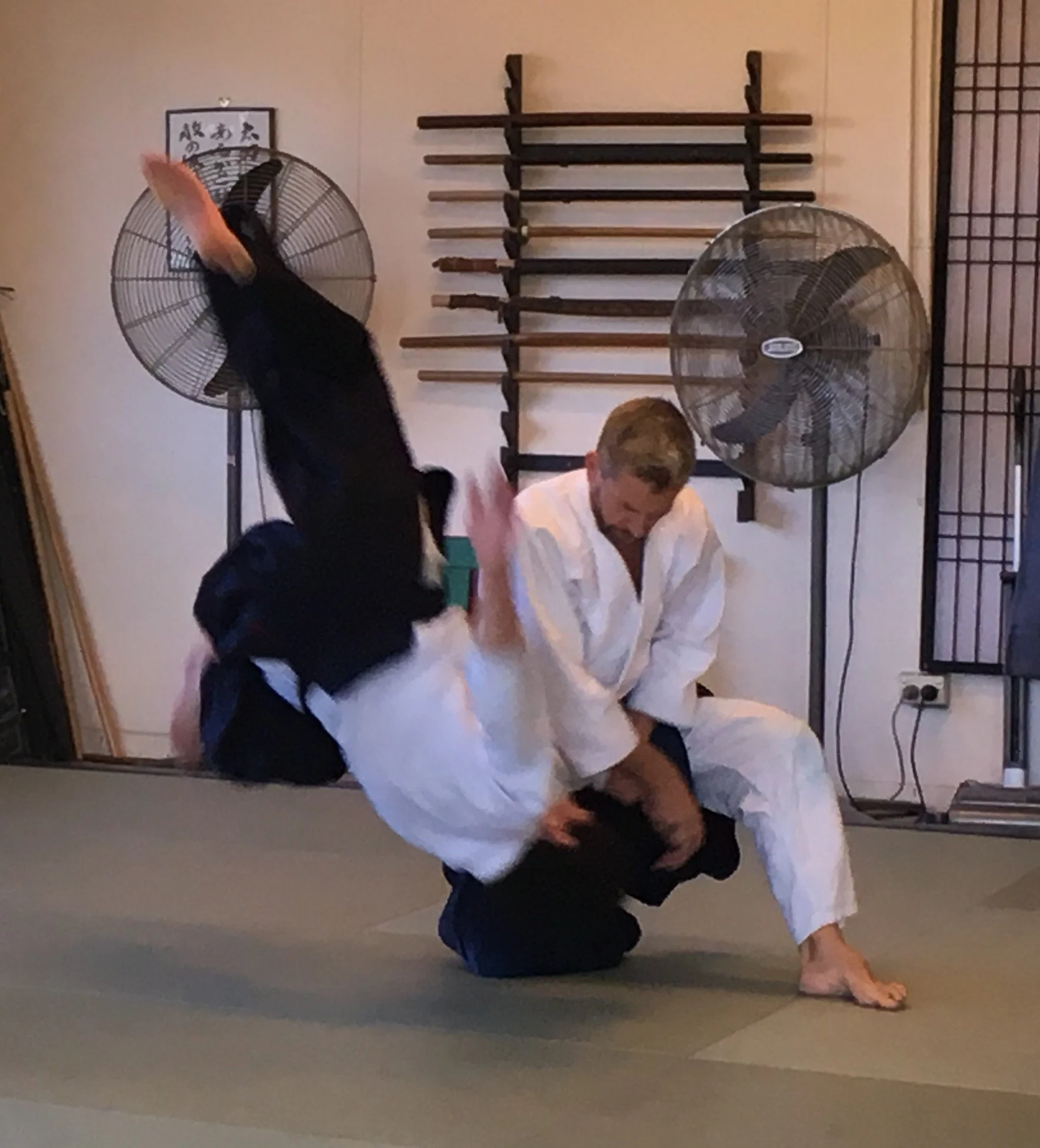
Technically, Aikido involves throws and locks. However, since there is no competition, practice involves one person attacking (uke) and one person receiving (tori). The attacker needs to learn commitment to give a full attack but also flexibility and responsiveness to be able to receive the full force of the technique without getting injured. Initially, the techniques are applied gently and carefully but as the uke becomes more skilled they can be applied with full force.
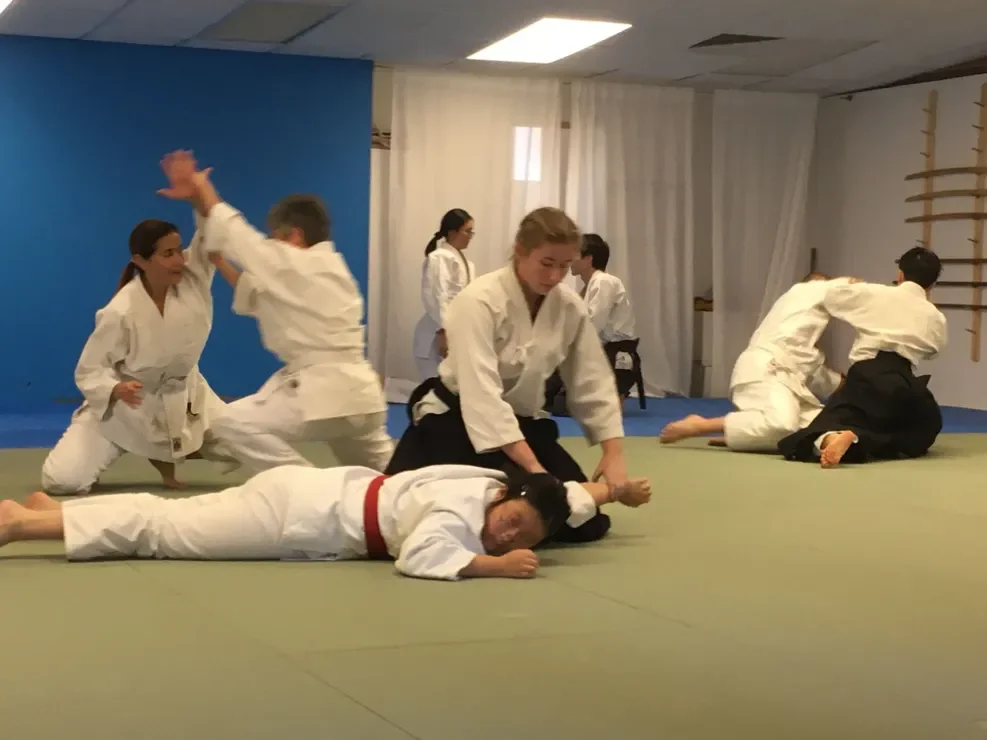
This means that the level of exercise and challenge adapts to the level of the practitioner. It starts gently for beginners but is extremely strenuous and challenging at a higher level. The person applying the technique has to develop sensitivity to work within the capabilities of the uke but at a higher level is freer to fully use his/her power once the uke has become skilled enough. One of the joys of Aikido is that this dynamic is never the same from one partner to the other or from one day to the next, so the abilities of the practitioners are always being challenged no matter what their level.